
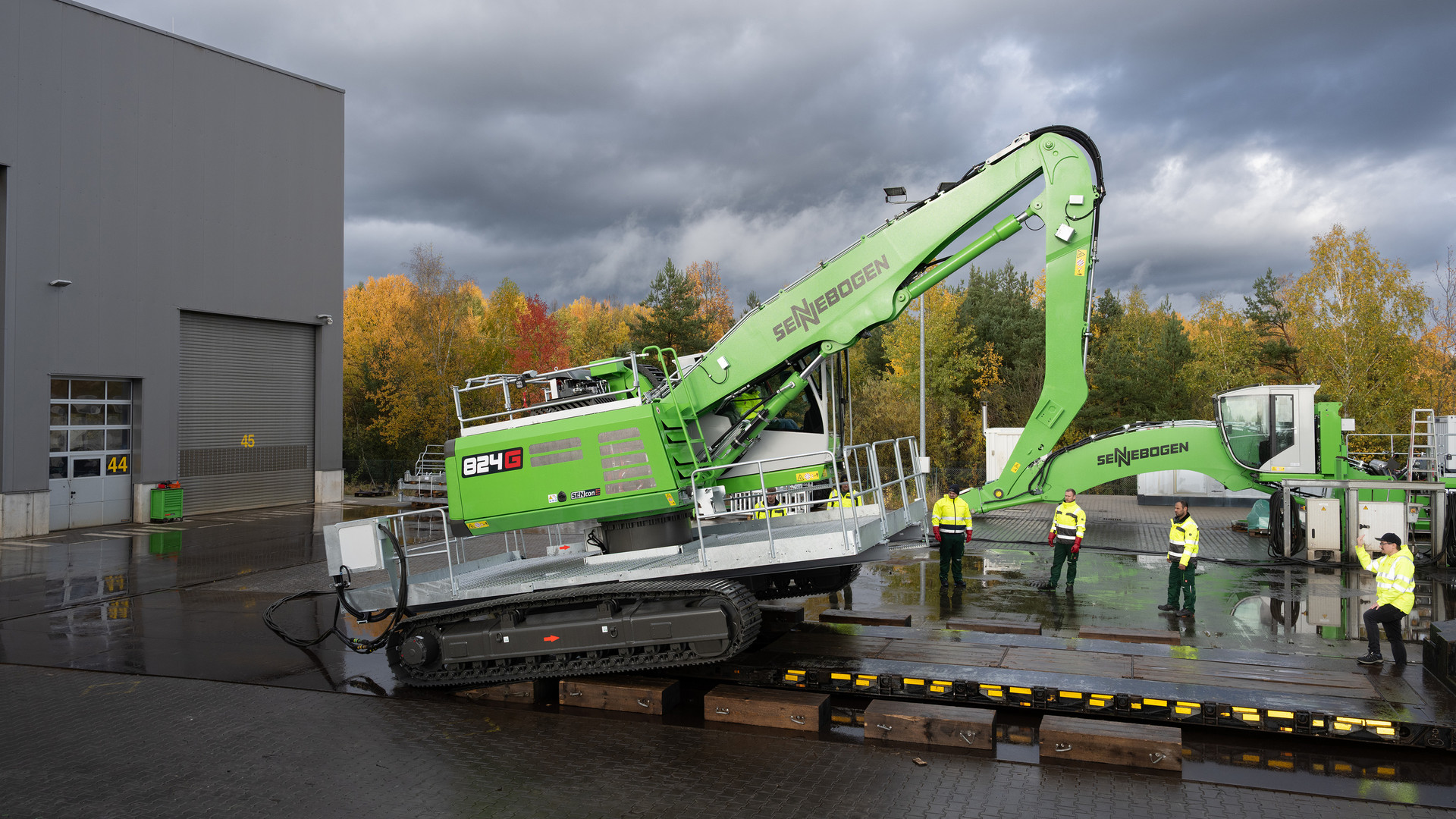
Most big machines turn up in pieces and get bolted together where they will work. This one turned up finished.
SENNEBOGEN announced on 29 July that a SENNEBOGEN 824 G Electro has gone into a mine as a single unit. Five metres wide on the trailer, which the maker says is the widest machine it has ever delivered in one piece. Route permits, escort vehicles, town centres and narrow streets, and the press photos show it moving at night. At the far end it was hoisted in whole, and SENNEBOGEN says no extensive final assembly was needed before the power went on.
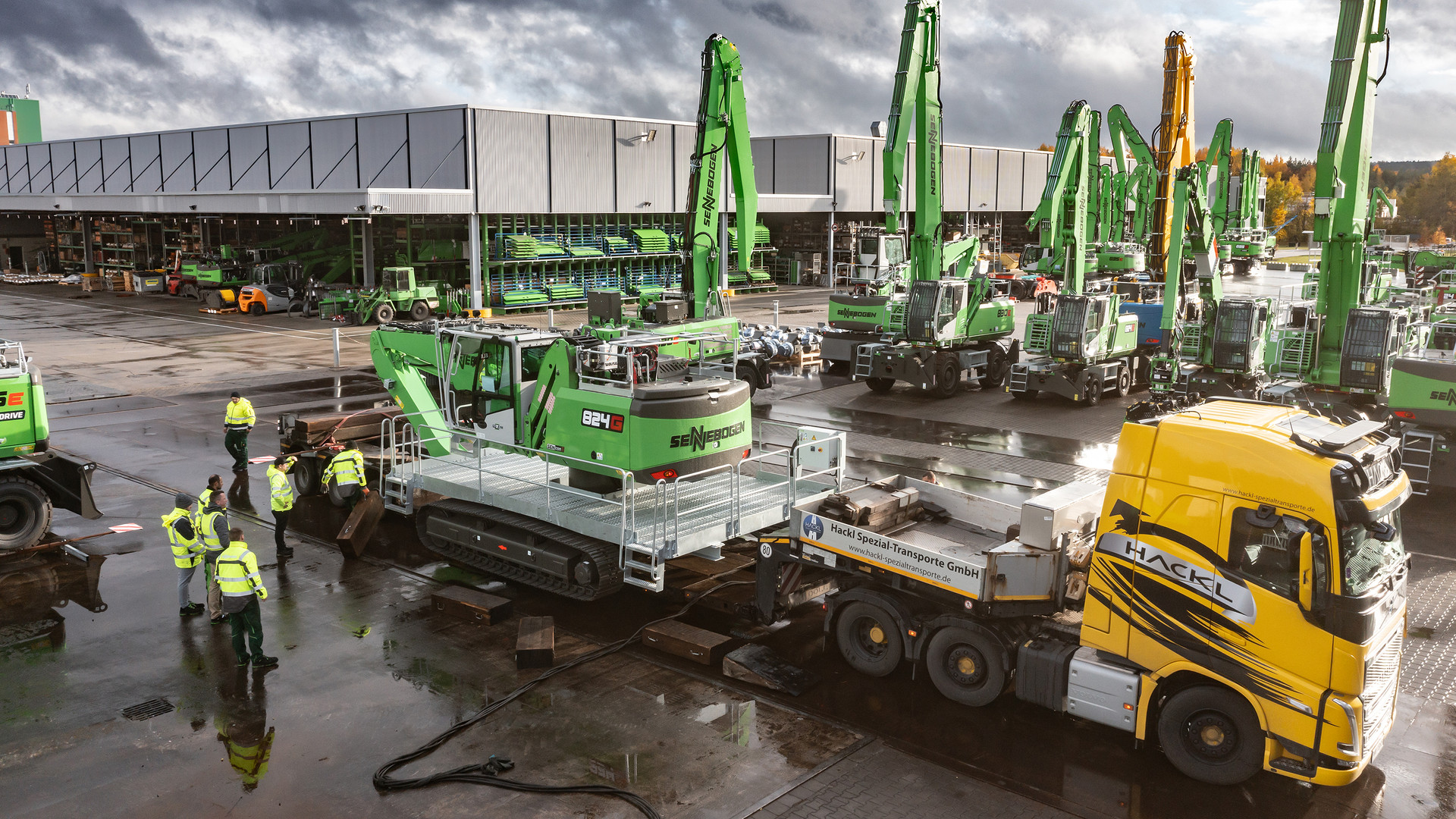
Why the SENNEBOGEN 824 G Electro travelled five metres wide
Not because it is a big machine. SENNEBOGEN lists the 824 G at up to 26.3 tonnes and up to 12 m reach. The width comes from what is bolted around it. Count it in the press photos: full-length grated walkways down both sides of the machine house, handrails the whole way. That is a service platform, and it is why a 26 tonne material handler needed escort vehicles to get to work.
What a one piece delivery buys, and what it locks in
SENNEBOGEN's argument is sound. Assembly at the destination is time, and down a pit every craned lift is booked weeks ahead, so taking out the assembly takes out a queue. The maker takes out its own risk too, because commissioning on someone else's site is the part of a sale it cannot supervise. Both sides of that desk win.
Here is the part that stings. If it had to be craned in, it has to be craned out. Call it the one way lift. Inside that pit the machine can tram wherever it likes. Moving it to another site means a crane booking, a permit and a five metre wide convoy, all over again. And the day something lets go inside that machine house, the repair plan starts with a crane, not a fitter.
THE MACHINE THAT GOES IN WHOLE COMES OUT WHOLE OR IT DOES NOT COME OUT.
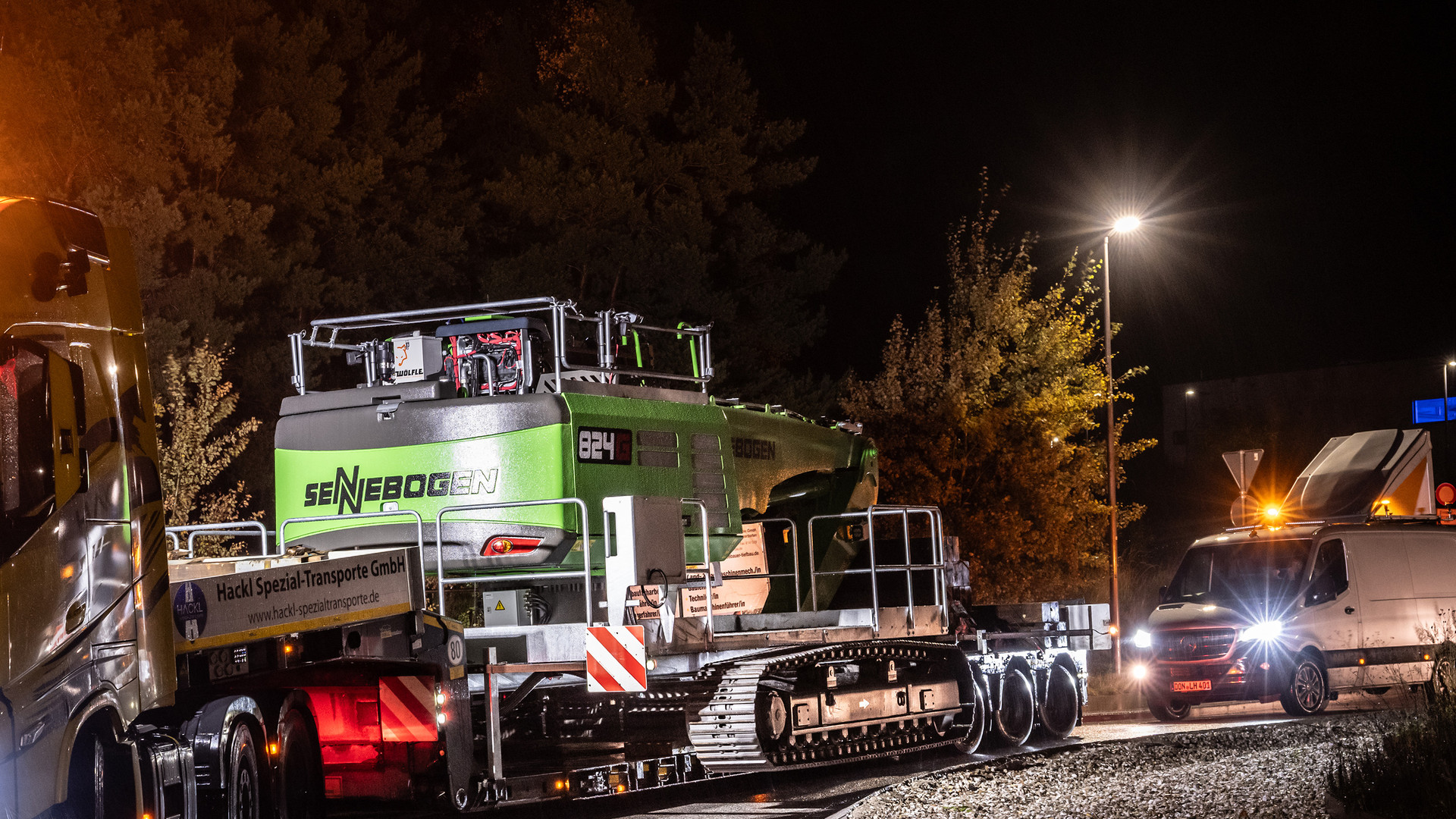
Ask about the exit before the machine goes in
Three things worth having in writing before you sign.
- Who carries the recovery cost, and whether the lift plan exists now or later.
- Whether the machine house can be serviced in place, boom down. Check those walkways reach what actually fails.
- Whether the power feed is rated for the machine that replaces this one.
That last one is the cheapest to get right today. The electrical connection SENNEBOGEN gives one line to belongs to the mine now, not the machine, and whoever set its rating has already made a decision for whoever buys the next one.
Source: SENNEBOGEN's 824 G Electro heavy-haul release, 29 July 2026.
We track the Australian used and new equipment market and publish what we find, in plain language, for the people actually buying and selling machines.