
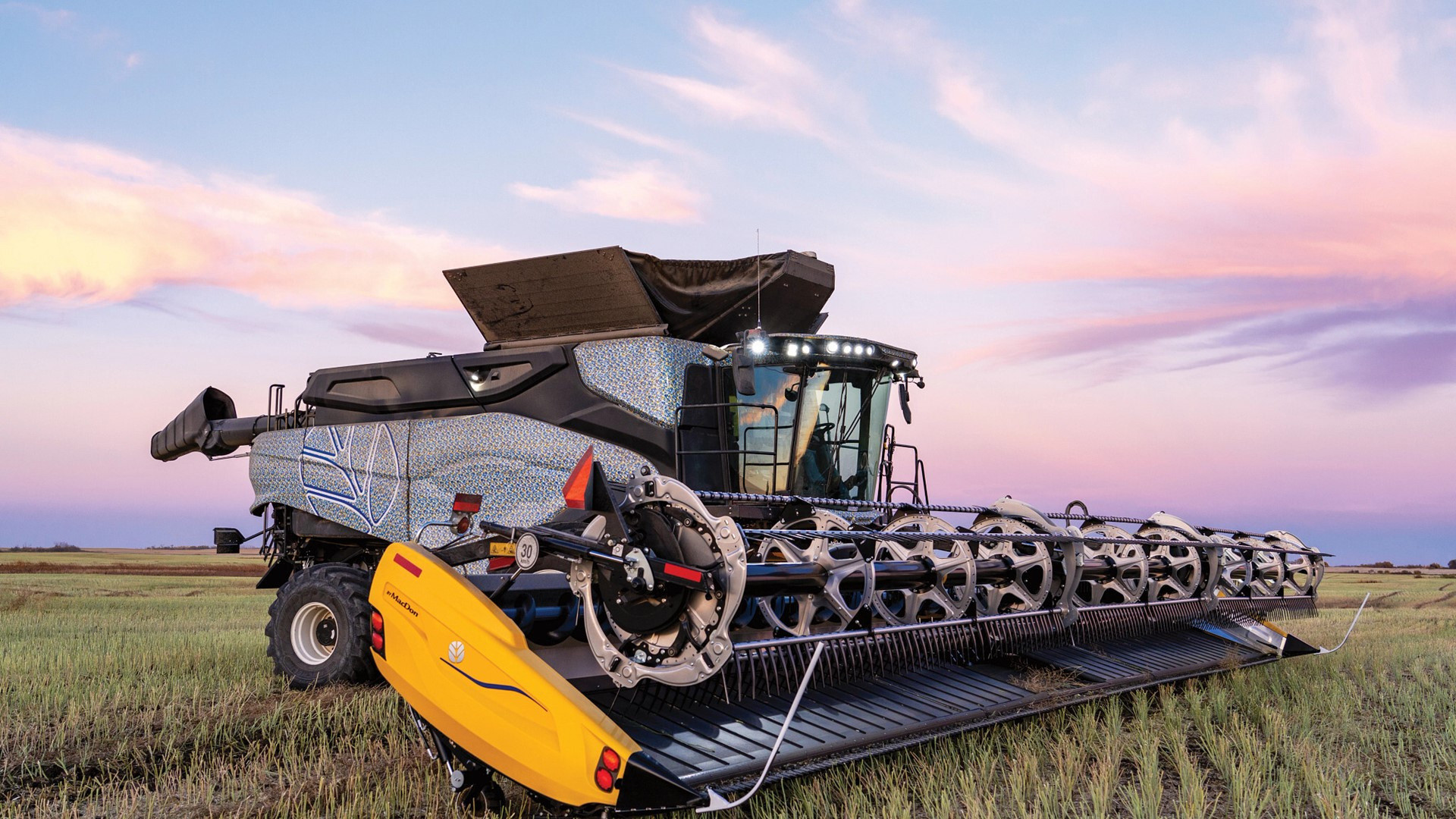
On a combine, the spec that pays is grain through the machine before the light goes. New Holland says its new CR11 has now done up to 140 tonnes an hour in wheat in UK trials. First deliveries running into harvest 2025 turned the world's most powerful combine from a launch-day spec sheet into iron that has cut a paddock for real.
Inside the New Holland CR11: 775hp and Twin Rotor threshing
The engine is a 15.9-litre FPT Cursor 16 producing 775hp, the most powerful New Holland has ever put in a combine. It feeds twin 600mm rotors, longer and wider than before, paired with a new TwinClean dual-sieve shoe of 8.76 square metres that holds its cleaning on side slopes up to 28 percent. The grain tank holds 20,000 litres and empties at 210 litres a second. The headline figure is roughly 20 to 40 percent more capacity than the CR10.90 it replaces, and that outgoing model already held the world wheat-harvest record.
Why throughput is the only combine spec that pays
Why does throughput rule everything on a combine? Because the whole season funnels through a window of days when the crop is ready and the weather is not your friend. A machine that clears the paddock faster lets a grower take the crop off at the right moment instead of watching it shed in the field. That is the real product here, not the horsepower badge.
What a CR11 costs to buy and to feed
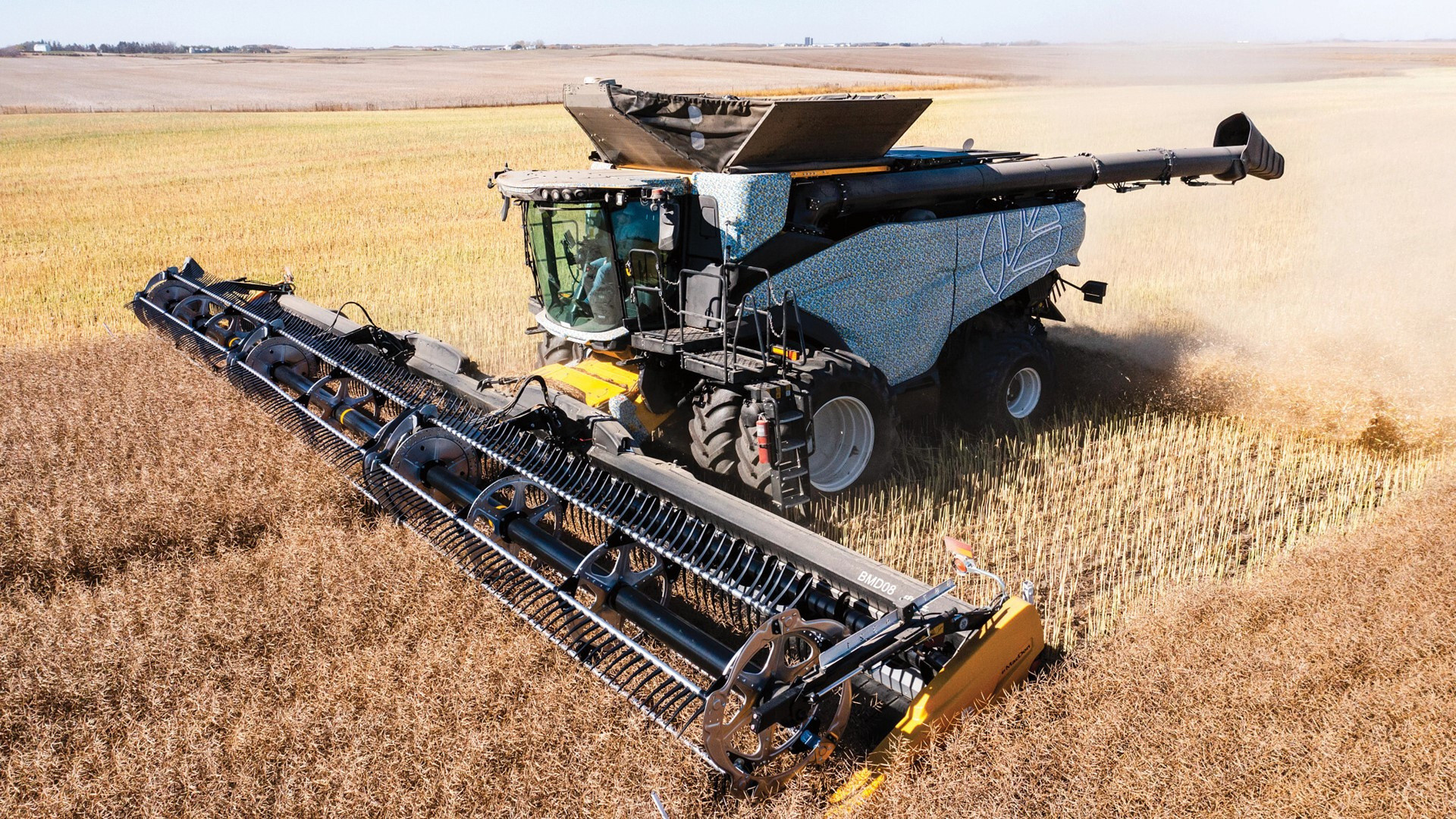
A flagship this size costs to buy and to feed, and that is the honest counterweight. Ten years in development, around 90 percent new components, built at New Holland's Centre of Excellence in Zedelgem, Belgium. It works with cutterbars from 10.6 to 15 metres including a 15-metre MacDon draper, plus 12 to 16-row corn headers, and an 18-metre header has already been trialled. Previewed at Agritechnica 2023, launched for harvest 2024 with order books open from July, first deliveries ran into harvest 2025.
The trials so far are European and North American, so the Australian read is lighter, but New Holland markets the Next-Gen CR series here and the buyer is the big-acreage wheat, barley and canola grower. For them the sums come down to two questions: whether the fronts already in the shed match its cutterbar range, and what 140 tonnes an hour actually costs per hour against the days it saves off the harvest window. A bigger number on the spec sheet only pays if the running cost and the header fit pay with it too.
Source: New Holland / CNH Industrial. Image: New Holland / CNH Industrial.
We track the Australian used and new equipment market and publish what we find, in plain language, for the people actually buying and selling machines.