
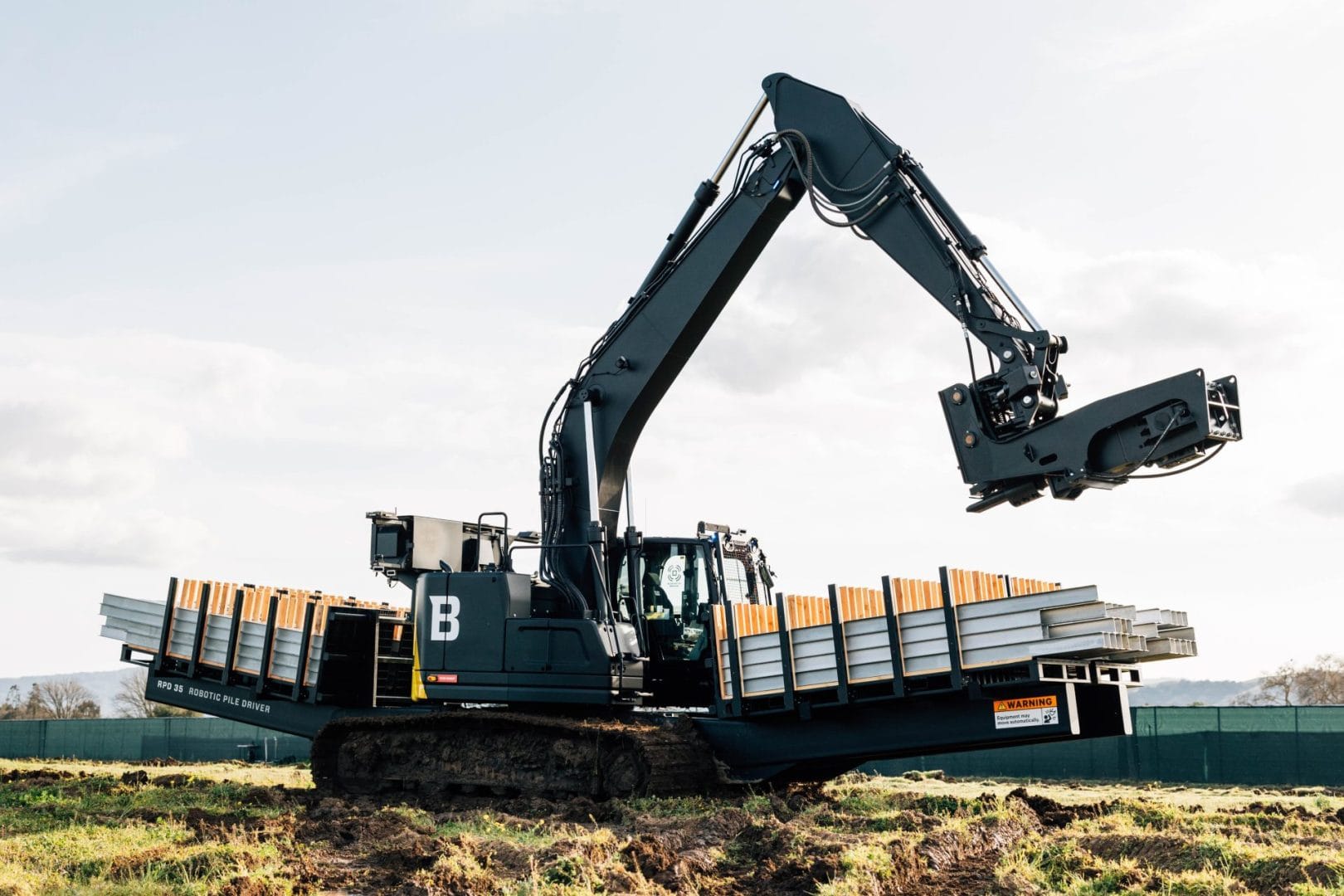
Forget the humanoid robots on the news. Out on the everyday jobsite, the first earthmoving task to hand its whole job to a machine is the dullest one going: driving solar piles into the ground, over and over, across a paddock the size of a suburb.
What the Built Robotics RPD 35 does
Built Robotics has a machine doing exactly that. The RPD 35 is a hydraulic excavator fitted with a vibratory hammer, and it surveys the ground, sets out the piles, drives them and logs the as-built data without anyone in the seat. It plants a new pile about every 73 seconds, three to five times the pace of a crew, and a two-person team can put in more than 300 in a day. Blattner, the biggest utility-scale solar contractor in the United States, has signed a three-year deal to run them across its sites.
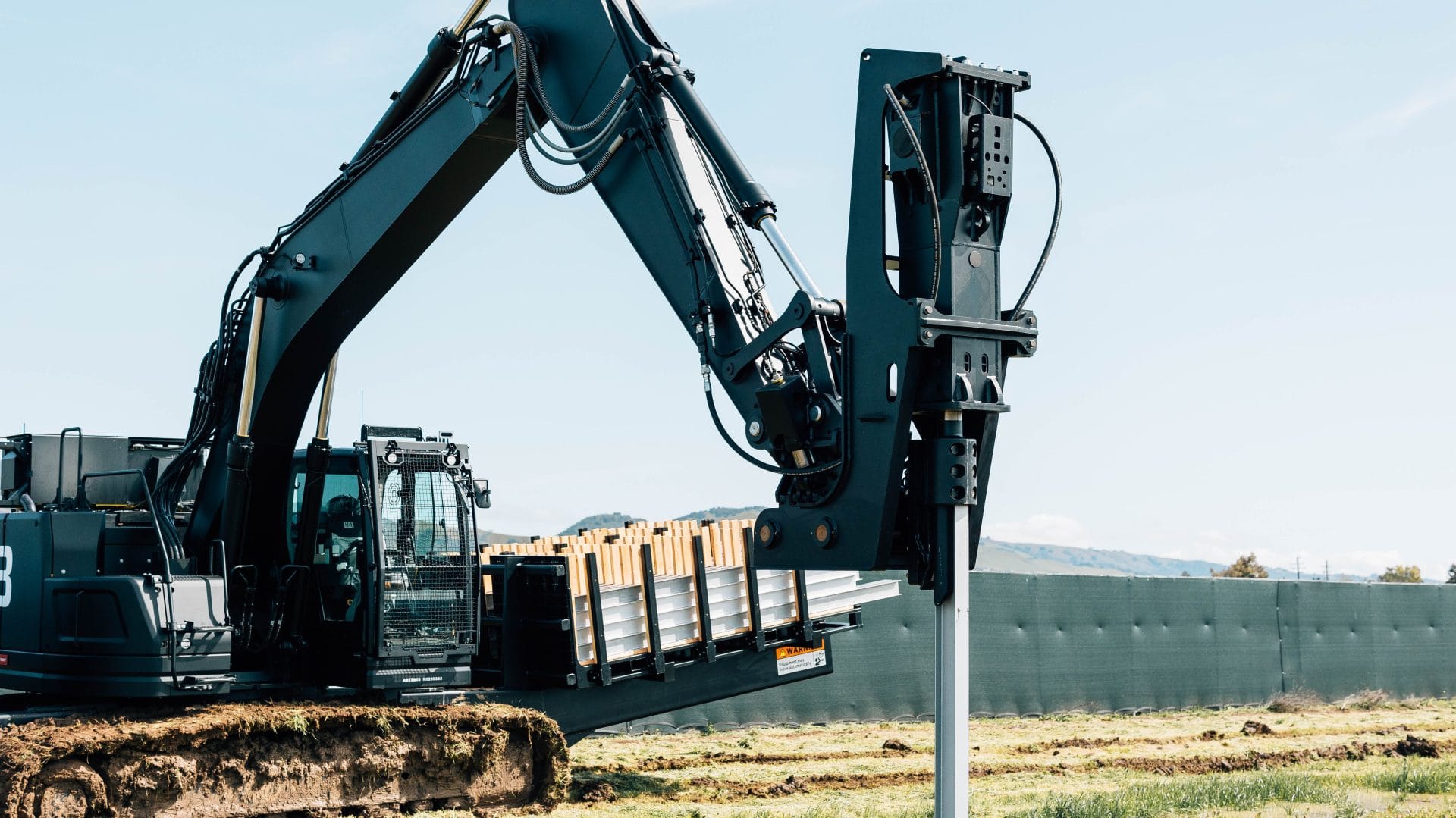
Why this job was automated first
What is worth noticing is which job went first. Not the skilled, varied work that takes a decade to learn. The opposite: a task that is identical, relentless and almost impossible to keep staffed. Solar piling is the same movement ten thousand times, in the heat, on a site nobody wants to be on. Get a feel for that shape, because it is the shape of every job that gets automated early. Work that needs a read on the ground and a feel for the machine sits a long way back in the queue.
What it means for the contractor and the operator
For the contractor it is a labour story before it is a robot story: more piles a day, fewer people to find. For the operator it is worth saying plainly. This does not come for the all-rounder who can jump on anything and make a call. It comes for the worst day on the roster. In Australia, where solar farms are going up across the outback and pile crews are genuinely hard to find, that is a day most would happily give away.
None of which makes the robot the headline. The headline is that the machines learning to work alone are starting with the jobs people least want to do. Pile number four hundred, in forty degree heat, was always going to be first.
Source: Built Robotics. Image: Built Robotics.
We track the Australian used and new equipment market and publish what we find, in plain language, for the people actually buying and selling machines.